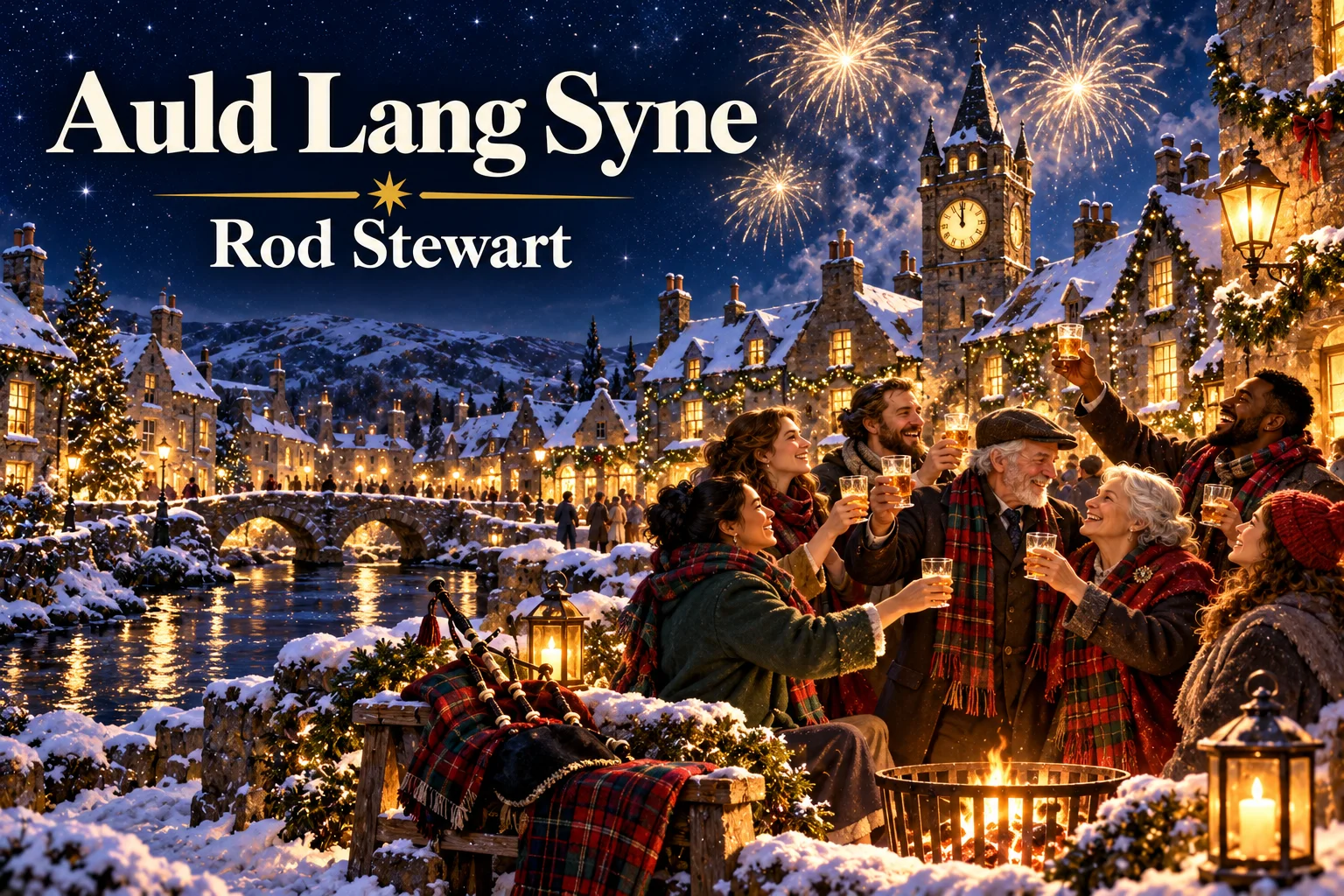
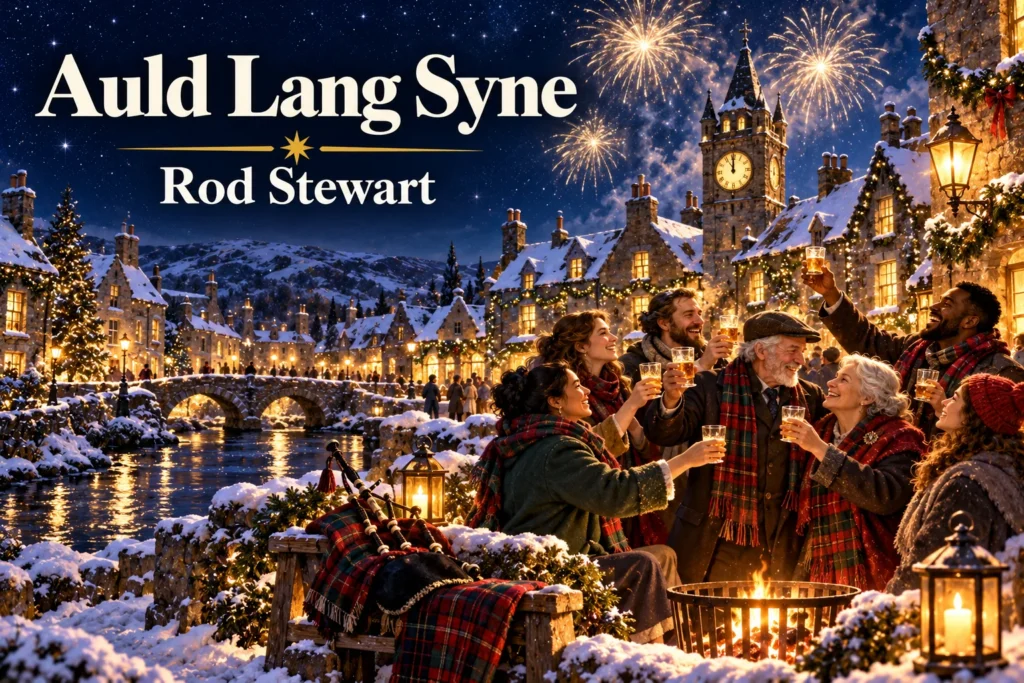
Auld Lang Syne
Should auld acquaintance be forgot,
And never brought to mind?
Should auld acquaintance be forgot,
And auld lang syne?
For auld lang syne, my dear,
For auld lang syne,
We’ll take a cup of kindness yet,
For auld lang syne.
And surely ye’ll be your pint-stoup,
And surely I’ll be mine!
And we’ll take a cup o’ kindness yet,
For auld lang syne.
We twa hae run about the braes,
And pou’d the gowans fine;
But we’ve wander’d mony a weary fit,
Sin’ auld lang syne.
We twa hae paidl’d in the burn,
Frae morning sun till dine;
But seas between us braid hae roar’d
Sin’ auld lang syne.
And there’s a hand, my trusty fiere!
And gie’s a hand o’ thine!
And we’ll tak’ a right gude-willie waught,
For auld lang syne.
Listen to the song
Hør sangen


About the carol Auld Lang Syne
“Auld Lang Syne” is a Scottish song closely associated with Robert Burns, who wrote down and reworked a traditional Scottish song in 1788. Burns was a Scottish poet and songwriter whose work played an important role in preserving Scottish songs and traditions. The phrase “auld lang syne” can be understood as referring to old times or days gone by. Although the song is not originally a Christmas carol, its association with the end of the year has made it a familiar part of the holiday season. National Trust for Scotland
The song centers on friendship, shared memories and the passage of time. Its narrator asks whether old friends and familiar relationships should ever be forgotten, leading to the well-known image of raising a cup together in remembrance of the past. The words are reflective rather than specifically festive, making the song especially appropriate for moments when one year is ending and another is about to begin.
Rod Stewart’s recording brings the song into a modern popular-music setting while retaining its traditional meaning. “Auld Lang Syne” is most strongly connected with New Year’s Eve, particularly the moment when people gather to mark the beginning of a new year. Its presence during the Christmas and New Year holiday period comes from this wider seasonal tradition, where Christmas celebrations gradually lead into reflection on the year that has passed and hopes for the year ahead.