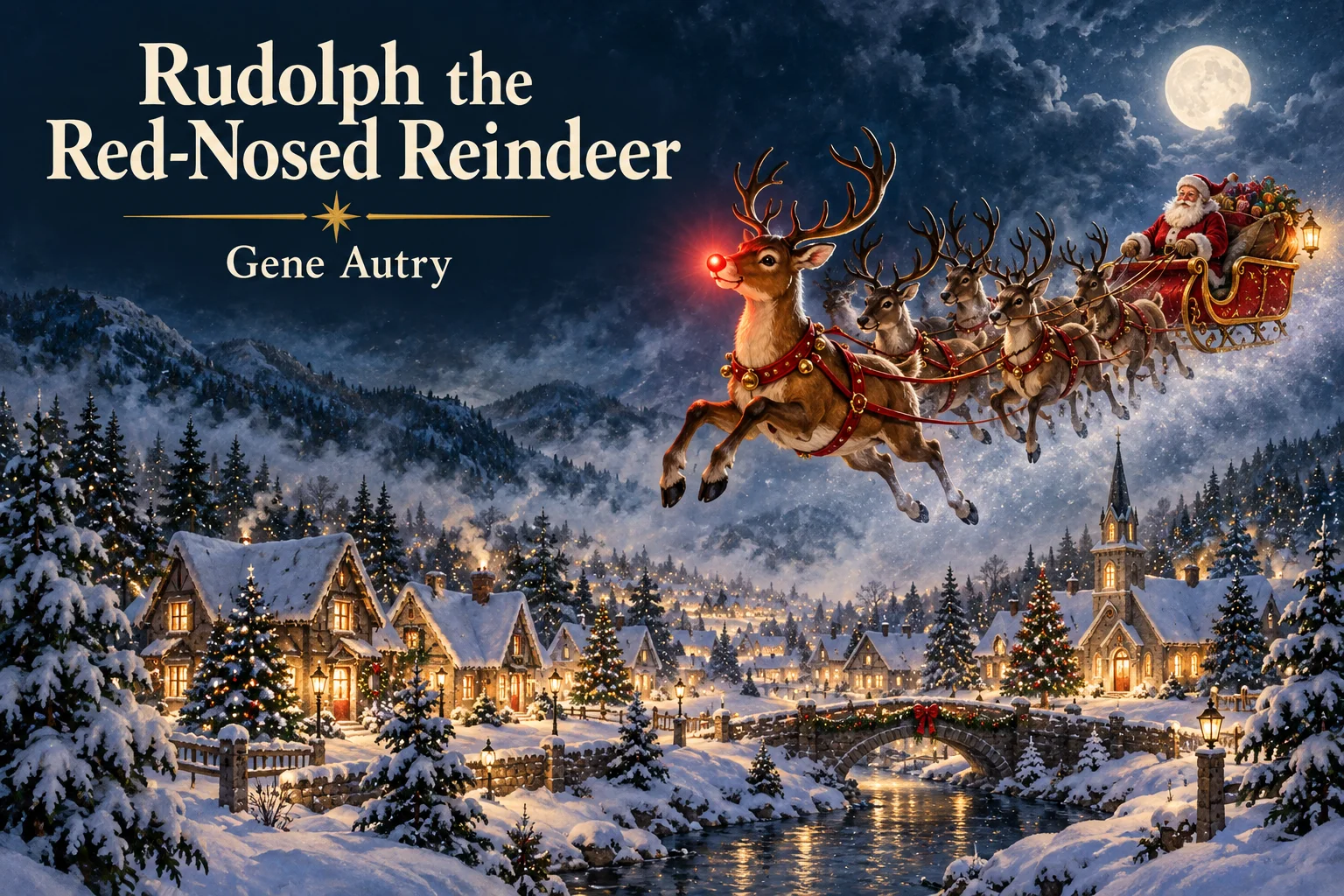
Rudolph the Red-Nosed Reindeer
You know Dasher and Dancer and Prancer and Vixen
Comet and Cupid and Donner and Blitzen
But do you recall
The most famous reindeer of all?
Rudolph the Red-Nosed Reindeer
Had a very shiny nose
And if you ever saw it
You would even say it glows
All of the other reindeer
Used to laugh and call him names
They never let poor Rudolph
Join in any reindeer games
Then one foggy Christmas Eve
Santa came to say
“Rudolph, with your nose so bright
Won’t you guide my sleigh tonight?”
Then how the reindeer loved him
As they shouted out with glee
“Rudolph the Red-Nosed Reindeer
You’ll go down in history”
Listen to the song
Hør sangen


About the carol Rudolph the Red-Nosed Reindeer
“Rudolph the Red-Nosed Reindeer” was written by Johnny Marks and first recorded by Gene Autry in 1949. The song was inspired by the story of Rudolph, a character created by Robert L. May in a 1939 booklet for Montgomery Ward. After becoming popular through the original story, Rudolph was introduced into Christmas music through Marks’ song, with Autry’s recording becoming one of the most successful Christmas songs of its time.
The song tells the story of Rudolph, a reindeer with a bright red nose that makes him different from the others. At first, Rudolph is excluded and laughed at because of his unusual appearance. However, when a foggy Christmas Eve makes it difficult for Santa’s sleigh to travel, Rudolph’s unique ability becomes valuable, and he helps guide Santa through the night. The story focuses on acceptance, confidence and the idea that differences can become strengths.
Gene Autry’s recording helped make Rudolph one of the most recognizable Christmas characters. The song’s message of inclusion and hope has made it especially popular with children and families. Today, Rudolph remains a major part of Christmas culture through songs, films and holiday traditions, representing the belief that everyone has something special to offer.