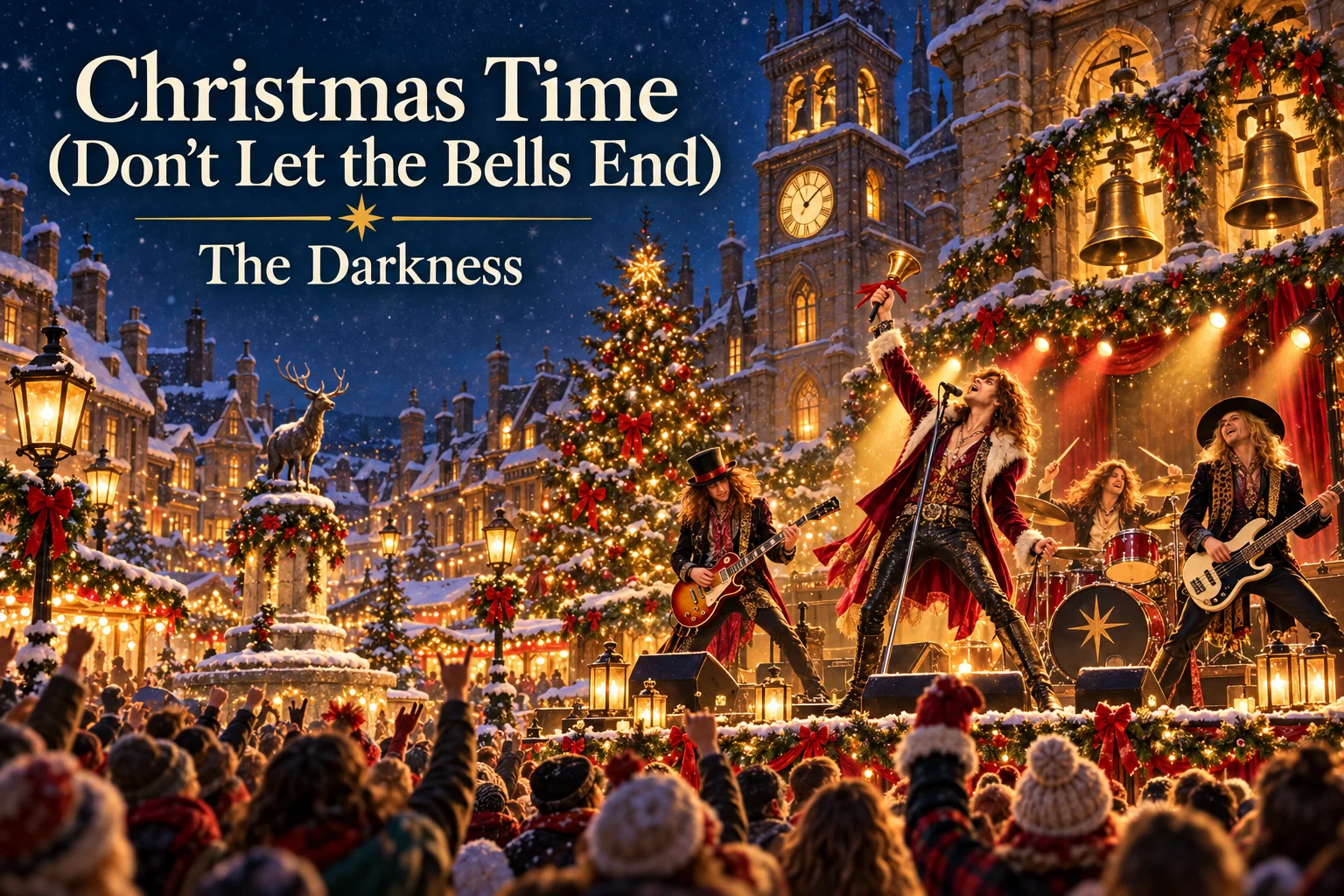
Christmas Time (Don’t Let the Bells End)
Feigning joy and surprise
At the gifts we despise over mulled wine with you
On the twenty-fifth day
Of the twelfth month, the sleigh bells are in time, ringin’ true
How we cling, each Noel, to that snowflake’s hope in hell
That it won’t end
Don’t let the bells end
Christmas time
Just let them ring in peace
Well, the weather is cruel
And the season of Yule lifts the heart, but it still hurts
You’ve got your career
Spent the best part of last year apart and it still hurts
So that’s why I pray each and every Christmas day
That it won’t end
Don’t let the bells end
Christmas time
Just let them ring in peace
Poised underneath the mistletoe leaf
And you’re not here
You went away, upon Boxing Day
Now how the hell am I gonna make it into the New Year?
Christmas time (don’t let it end)
Don’t let the bells end
Christmas time
Don’t let the bells end (don’t let the bells end)
Christmas time
Don’t let the bells end
Christmas time
Just let them ring in peace
Christmas time (come on, kids)
Don’t let the bells end (bells end)
Christmas time
Don’t let the bells end
Don’t let the bells end
Listen to the song Christmas Time (Don’t Let the Bells End) performed by Christmas Party Singers
Listen to the song
Hør sangen

About the carol Christmas Time (Don’t Let the Bells End)
“Christmas Time (Don’t Let the Bells End)” is a 2003 Christmas single by the British rock band The Darkness. Written by Justin Hawkins, Dan Hawkins, Frankie Poullain and Ed Graham, the song combines hard rock with familiar Christmas sounds and a deliberately humorous approach. It was released in December 2003 during the British Christmas singles season and became one of the band’s most recognizable holiday recordings.
The song mixes Christmas romance with the exaggerated style associated with The Darkness. Its story involves separation from a loved one around the holidays, giving the festive setting an emotional side beneath the jokes and loud rock performance. Bells, mistletoe and Christmas celebrations are used throughout the song, while the title itself contains a deliberate double meaning characteristic of the band’s humor.
The recording’s Christmas identity comes from both its subject and its musical arrangement. The band incorporated a school choir from Haberdashers’ Aske’s Hatcham College for backing vocals, adding a traditional choral element to the heavy rock sound. The song reached number two on the UK Singles Chart in 2003, making it a notable Christmas-season release.