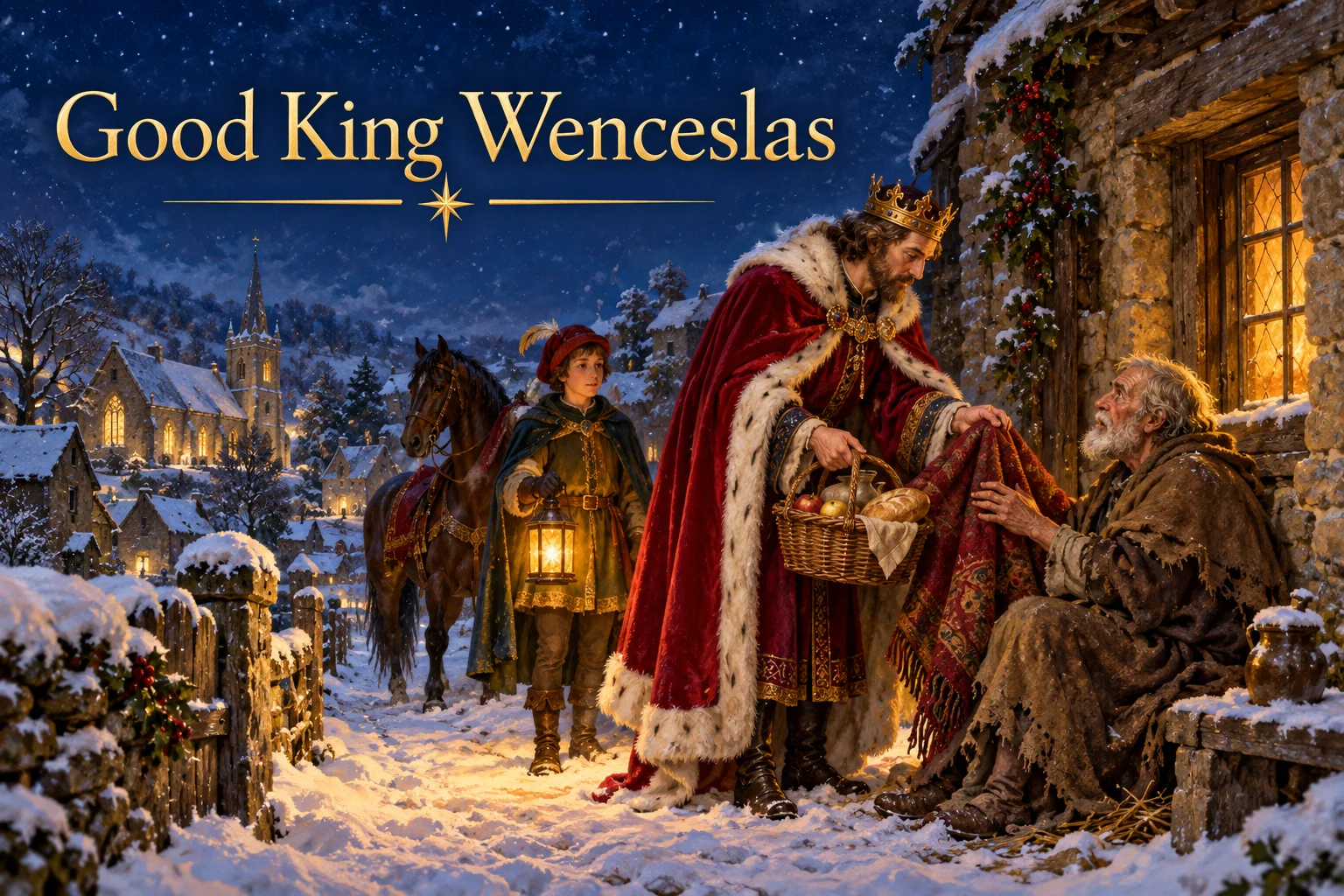
Good King Wenceslas
Good King Wenceslas looked out
On the Feast of Stephen
When the snow lay ’round about
Deep and crisp and even
Brightly shone the moon that night
Though the frost was cruel
When a poor man came in sight
Gathering winter fuel
Hither, page, and stand by me
If thou knowst it, telling
Yonder peasant, who is he?
Where and what his dwelling?
Sire, he lives a good league hence
Underneath the mountain
Right against the forest fence
By Saint Agnes fountain
Then bring me flesh and bring me wine
Bring me pine logs hither
Thou and I will see him dine
When we bear them thither
Page and monarch, forth they went
Forth they went together
Through the rude winds wild lament
And the bitter weather
Sire, the night is darker now
And the winds blow stronger
Fails my heart, I know not how
I can go no longer
Mark my footsteps, my good page
Tread thou in them boldly
Thou shall find the winter’s rage
Freeze thy blood less coldly
In his master’s step he trod
Where the snow lay dinted
Heat was in the very sod
Which the Saint had printed
Therefore, Christian men, be sure
Wealth or rank possessing
Ye, who now will bless the poor
Shall yourselves find blessing
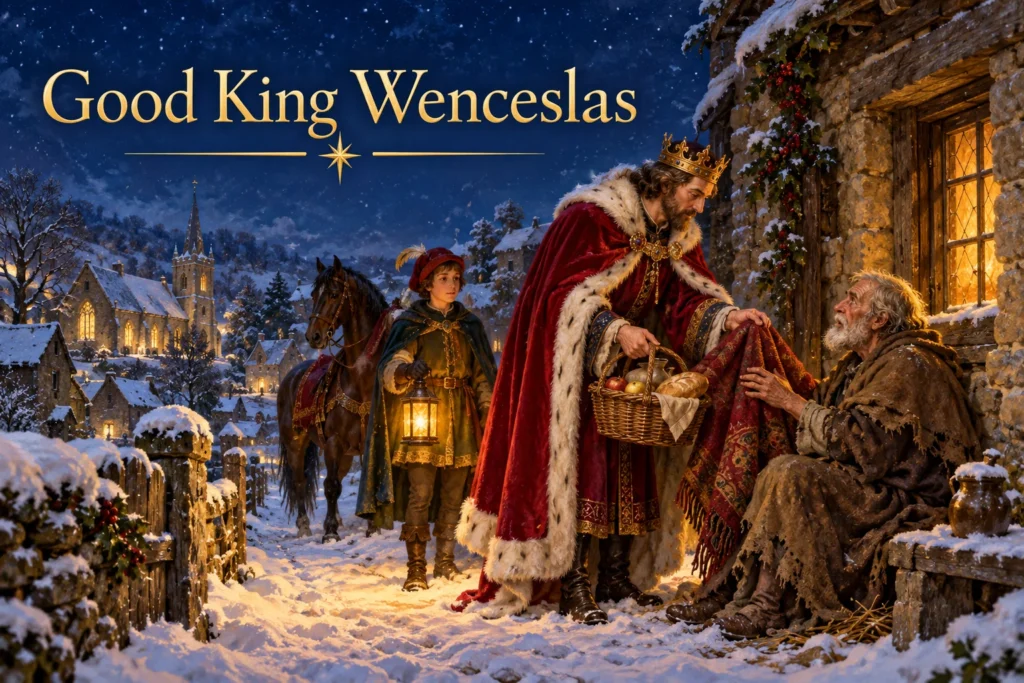
Listen to the song
Hør sangen


About the carol Good King Wenceslas
“Good King Wenceslas” is a Christmas carol written by English clergyman and hymn writer John Mason Neale, with its familiar melody based on a medieval tune associated with the spring carol “Tempus adest floridum.” Neale published the carol in the nineteenth century. Bing Crosby later recorded it as part of his Christmas repertoire, bringing the traditional story to a broad popular audience. The Metropolitan Museum of Art
The song tells of King Wenceslas looking out on the Feast of Stephen and seeing a poor man gathering wood. Rather than ignoring him, the king decides to help and sets out with his page to bring food and firewood. The story emphasizes generosity and compassion, especially toward someone experiencing hardship during winter.
Its Christmas connection comes through both the winter setting and the feast day mentioned in the opening of the song. More importantly, the story presents generosity as a central part of the Christmas spirit. Bing Crosby’s recording places the traditional carol within the popular Christmas repertoire, while the narrative continues to remind listeners that the season can be about helping others as much as celebrating with family.